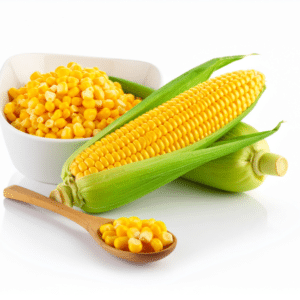
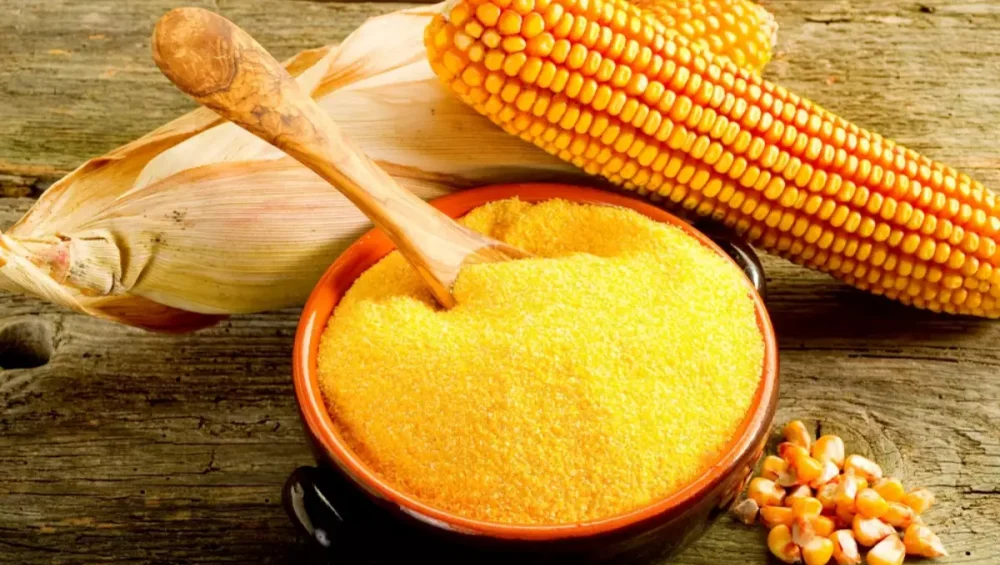
Corn grits, flour, and bran are three of the most widely used raw materials across the food and feed industry today. Whether you manufacture extruded snacks, breakfast cereals, bakery products, or livestock feed — your choice of corn ingredient and grade has a direct impact on your product quality and cost efficiency. This guide explains what each product is, where it is used, what parameters matter, and how food and feed industry buyers in India and globally can find the right supplier for consistent bulk supply.
Corn Processing: How Products Are Made
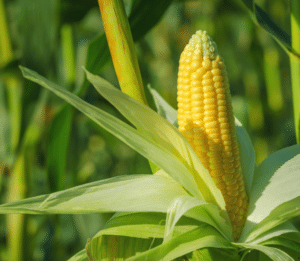
All corn ingredients begin with cleaned, dried maize kernels. During processing, the maize is broken down and separated into distinct fractions depending on the intended end use:
- The endosperm (starchy inner part) is milled into corn grits of different sizes, or further ground into corn flour
- The germ is typically extracted for corn oil
- The bran (outer fibrous layer) is separated as corn bran
Each fraction has distinct physical properties, nutritional characteristics, and industrial uses. Understanding this helps buyers immediately identify which product they need.
Corn Grits for the Food and Feed Industry — Applications and Key Parameters
What are corn grits?
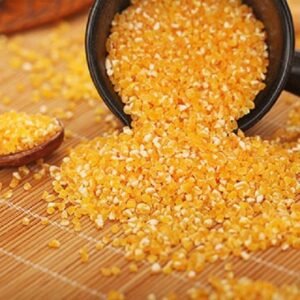
Corn grits are granular particles produced from the milled endosperm of maize. They range from coarse to medium granulation depending on the intended application. Corn grits are dry, shelf-stable, and designed for direct use in manufacturing processes.
Where are corn grits used?
| Industry | Application | Key Parameter |
|---|---|---|
| Snack manufacturing | Extrusion, frying | Granulation, moisture |
| Cereal production | Flaking (cornflakes) | Particle size, density |
| Brewing | Adjunct fermentation | Starch content, purity |
| Bakery | Texture enhancement | Particle size, flavour |
| Food processing | Various food formulations | Consistency, cleanliness |
What buyers should check:
Granulation range, moisture level, foreign matter content, and bulk density are the four key parameters to evaluate before approving a corn grits grade. Always trial your chosen grade in actual production before moving to full-volume procurement.
Flaking Grits: The Specialist Grade for Cereal Manufacturers
Flaking grits are a specific type of corn grits produced for drum flaking applications — the process used to manufacture cornflakes and similar breakfast cereal products.
What makes flaking grits different:
Standard corn grits and flaking grits differ primarily in particle size and density profile. Flaking grits are processed to deliver pieces of a specific size and structure that respond correctly when passed through a drum flaker — producing thin, uniform flakes with consistent texture and colour.
Key buyer requirements:
Cereal manufacturers require tight size tolerances and uniform density in flaking grits. Variation in either parameter shows up directly as irregular flake size, poor colour, or breakage in the final product. Buyers should request detailed granulation specifications and a sample lot before full procurement.
Corn Flour and Corn Bran: Roles in Food and Feed Industry Manufacturing
What is corn flour?
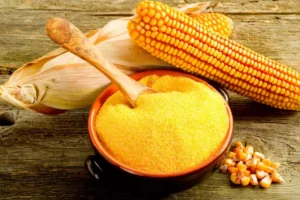
Corn flour is produced by finely milling the dried endosperm of maize to a flour-like consistency. It is lighter than corn grits and has a smooth, fine texture suited to a variety of food formulations.
Where is corn flour used?
- Coating and batter formulations for fried snacks and proteins
- Tortillas and flatbreads
- Gluten-free baking applications
- Ready-to-eat food products
- Sauces and binders where fine corn powder is required
What buyers should check:
Particle size (fineness), moisture content, colour (off-white to light yellow is standard), and flavour neutrality are important for food-grade corn flour. If you are using corn flour in a branded product, ensure your supplier can maintain lot-to-lot consistency so your product taste and texture does not change.
Corn Bran: Feed-Grade Applications and Buyer Considerations
What is corn bran?
Corn bran is the fibrous outer layer of the maize kernel, separated during the corn milling process. It is a by-product of corn processing that has significant value in the animal feed industry due to its fibre and energy content.
Where is corn bran used?
- Poultry (broiler and layer) feed formulations
- Dairy cattle and ruminant feed rations
- Pig feed
- Aquafeed (certain formulations)
- Pet food manufacturing
Why corn bran matters in feed:
Corn bran contributes dietary fibre, energy density (through digestible carbohydrates), and blending flexibility in complete feed rations. For feed millers, consistent quality and supply reliability are the two most important factors — because feed formulations are calibrated to specific ingredient nutritional values, and changes in bran quality can shift the nutritional profile of the final feed.
What buyers should check:
Moisture content, fibre level, presence of foreign material, and mould/mycotoxin status are key parameters for feed-grade corn bran. Reputable suppliers will provide a certificate of analysis with every lot.
How to Choose the Right Corn Grits or Flour Grade for Your Industry
Here is a quick-reference guide for matching corn products to common industrial applications:
| Application | Recommended Product | Key Spec |
|---|---|---|
| Extruded snacks | Corn Grits (medium) | Uniform granulation, low moisture |
| Cornflakes / cereal | Flaking Grits | Size 4–6mm, consistent density |
| Coating and batter | Corn Flour | Fine particle size, neutral flavour |
| Tortillas / flatbreads | Corn Flour | Fine, uniform, low moisture |
| Brewing adjunct | Corn Grits (coarse) | Starch purity, low fines |
| Livestock / poultry feed | Corn Bran | Fibre level, low mycotoxin |
| Dairy / ruminant feed | Corn Bran | Consistent quality, moisture control |
How to Source These Products From a Reliable Manufacturer
Regardless of which corn product you need, these steps will help you qualify a supplier effectively:
- Define your specification — granulation, moisture, pack size, monthly volume
- Request a sample and test in your actual process
- Evaluate the supplier’s capacity and infrastructure — can they scale with your growth?
- Check documentation capabilities — especially important for export buyers
- Start with a trial order before moving to a long-term supply contract
- Build a recurring procurement cycle to avoid supply gaps and qualify for volume pricing
A professional supplier will guide you through this process rather than pushing you to place large orders before you have confirmed the grade is right for your application.
About Supriya Corn
Supriya Corn is a Hyderabad-based corn products manufacturer with nearly four decades of experience supplying food and feed industries across India and internationally. Our range — corn grits, flaking grits, corn flour, and corn bran — is produced using advanced Bühler AG processing technology with a daily capacity of 240 metric tonnes.
We work directly with food manufacturers, cereal brands, snack producers, breweries, bakeries, feed mills, and export buyers to match the right product grade to their application and maintain it consistently across long-term supply relationships.
📞 040-29303144 | 🌐 supriyacorn.com