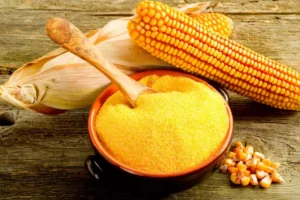
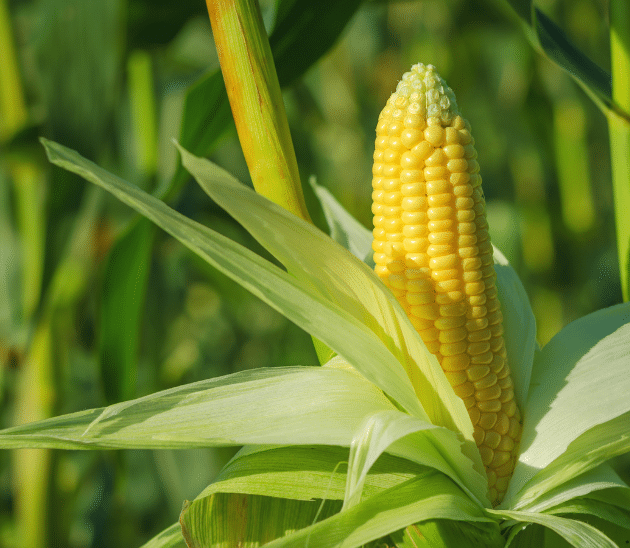
Maize grits export India is a growing sourcing opportunity for international buyers who want competitive pricing, consistent quality, and reliable shipment cycles. India produces over 35 million metric tonnes of maize annually, making it one of the strongest origins for bulk corn ingredient procurement globally. In this guide, we explain exactly how to source maize grits from India, what documentation to expect, and how to evaluate the right export partner for your requirements.
Why Maize Grits Export From India Is Growing in Demand
India produces over 35 million metric tonnes of maize annually, providing a consistent and large raw material base for corn processors. Several factors make India a preferred export origin for international buyers:
- Competitive pricing: Lower input costs and large-scale processing infrastructure allow Indian exporters to offer strong commercial terms compared to other origins
- Diverse grades available: Indian processors offer multiple granulation sizes and product types (grits, flaking grits, flour, bran) suited for different industrial applications
- Processing expertise: Many Indian corn processors have decades of manufacturing experience and advanced processing technology
- Export infrastructure: Well-established port infrastructure, freight connections, and export documentation processes make shipments manageable
- Regulatory compliance: Experienced Indian exporters can provide full food safety documentation, quality certificates, and phytosanitary certificates as required
Understanding Maize Grits Grades for Export
Not all maize grits are the same. Different export markets and applications require different product specifications:
For cereal and flaking manufacturers: Flaking grits require specific granulation ranges (commonly 4–6mm or similar) and consistent density to ensure proper flake formation on drum flakers.
For snack manufacturers: Extrusion applications typically use finer corn grits with controlled moisture and granulation for consistent expansion and texture.
For brewing applications: Breweries sourcing corn grits as an adjunct look for specific starch content, particle size, and low foreign matter to ensure stable fermentation performance.
For bakery and food processing: Fine-to-medium corn grits and corn flour are used for coatings, batters, and other food applications where particle fineness and flavour neutrality matter.
When approaching an Indian maize grits exporter, always lead with your application details and current specification. This ensures you receive the correct grade recommendation rather than a generic offer.
Export Documentation: What to Expect
Importing maize grits from India involves a standard set of documents. A professional Indian exporter will provide:
- Commercial Invoice – itemised bill of goods with unit pricing, quantity, and Incoterms
- Packing List – detailed breakdown of bags, weights, and shipment dimensions
- Certificate of Origin – issued by the relevant Indian trade body confirming Indian origin
- Quality Certificate / Certificate of Analysis (COA) – confirming product specifications match the agreed-upon parameters
- Phytosanitary Certificate – required by many destination countries for agricultural products
- Bill of Lading / Airway Bill – shipment and carrier confirmation
Some destination countries may require additional certifications (FSSAI, Halal, etc.). Clarify these requirements upfront so your export partner can arrange accordingly before shipment.
Packaging and Shipping Options
Packaging for maize grits export from India typically includes:
- PP woven bags (25kg, 50kg) – standard for most food-grade shipments
- Laminated bags – for moisture-sensitive destinations or premium requirements
- Jumbo bulk bags (FIBC) – for large-volume industrial buyers who prefer to unpack at their end
- Custom labelling – exporters can print your destination requirements, net weight, and handling details
Shipping mode depends on volume and destination. FCL (Full Container Load) is typically the most cost-effective for bulk orders. LCL (Less Container Load) works for smaller trial shipments. Discuss Incoterms (FOB, CIF, CFR, etc.) clearly upfront so responsibilities and cost transfer points are agreed before the shipment is confirmed.
How to Evaluate a Maize Grits Export India Supplier
Before placing a bulk order with any Indian maize grits supplier, consider:
- Request product samples and test them in your production process before committing
- Verify export experience — ask for references or details of previous export shipments to your region
- Confirm production capacity to ensure they can handle your volume without delays
- Check documentation capabilities — an experienced exporter will have no issues providing full documentation
- Evaluate responsiveness — quick, clear communication is a strong indicator of how smoothly your supply relationship will run
How Supriya Corn Supports Global Maize Grits Buyers
Supriya Corn has been supplying corn-based products to buyers across 15+ countries from our Hyderabad facility. Our export range includes corn grits in multiple granulation sizes, flaking grits, corn flour, and corn bran — all produced with advanced Bühler AG processing technology and a daily capacity of 240 metric tonnes.
We support export buyers through every stage:
- Pre-shipment: Grade selection, sampling, spec confirmation
- Shipment: Packaging, documentation, dispatch planning
- Post-shipment: COA, quality follow-up, and repeat order support
Whether you are an importer, a trading company, or an end-user manufacturer looking to source directly from India, our team will provide you with a transparent, responsive, and application-focused export experience.
Share your product, destination, quantity, and Incoterm preference — and we will respond with a complete commercial offer within 24 hours.
📞 040-29303144 | 🌐 supriyacorn.com